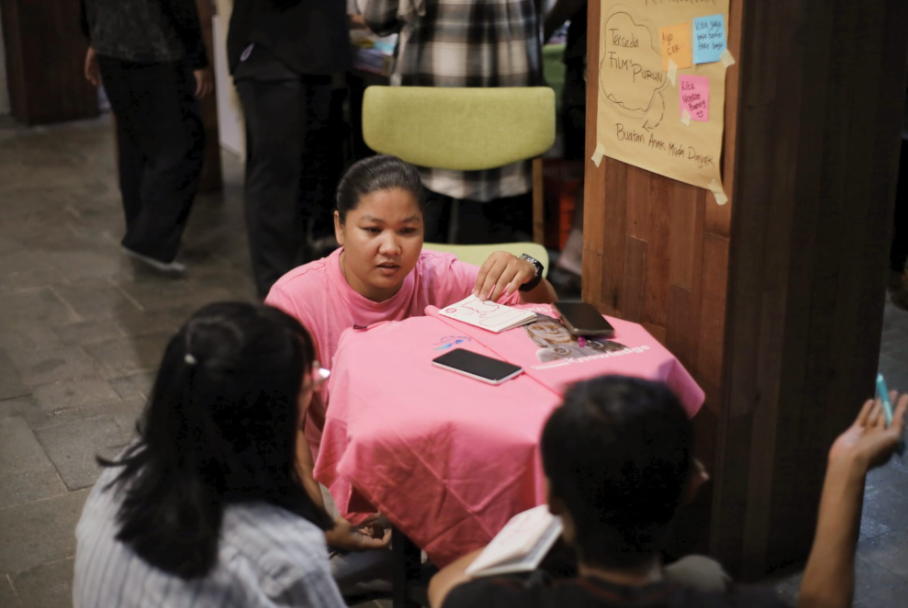
Notes from Youth Act Kalimantan at Arisan Laba-Laba Social by Pamflet Generasi
Arisan is generally known as a routine gathering, money circulating, casual conversations flowing, and then everyone goes home. It is a familiar social ritual, often seen as harmless and trivial. In a broader social imagination, arisan is framed as a “safe” space: non-political, non-confrontational, and producing nothing more than fleeting togetherness.
In this gathering, we reflected once again on Arisan Laba-Laba in its broader meaning. It is no longer about the circulation of money, but about the circulation of knowledge, experiences, and relationships.
For me, this gathering was more than an event. It became a shared learning space, about how local knowledge is cared for, how everyday stories can function as living archives, and how social networks can grow without relying on monetary logic.
Sitting Together, Listening Together
Arisan Laba-Laba Social began with a collective screening of the documentary Purun, which documents purun-based craft practices in Kalimantan, created by young people from Kalimantan. The film brings attention to forms of work that are often overlooked: weaving, caring, maintaining relationships with nature, and surviving amid the climate crisis.
For Youth Act Kalimantan, the film felt deeply familiar. It reflects the kind of work we do alongside communities, documenting local knowledge, working through relationships, and believing that everyday stories are as valuable as formal data or reports.
Watching together became the simplest way to attune ourselves. There was no clear divide between speakers and listeners. Everyone sat on the floor, paying attention, allowing personal memories and lived experiences to surface.
An Arisan Without Money, A Barter Without Price
From the very beginning, one agreement was clear: no money would be used. What was exchanged were stories, experiences, failures, working methods, and survival strategies.
For us, this felt like a small exercise, however temporary, in loosening our grip on capitalist logic. In this space, value was not measured by price, but by relevance and honesty.
Youth Act Kalimantan shared our practices of documenting local knowledge with communities, how archives can emerge from relationships rather than rigid institutions. We also listened to other collectives, practices: zine-making, feminist organizing, accessibility work with Deaf communities, and experimental approaches to gender education.
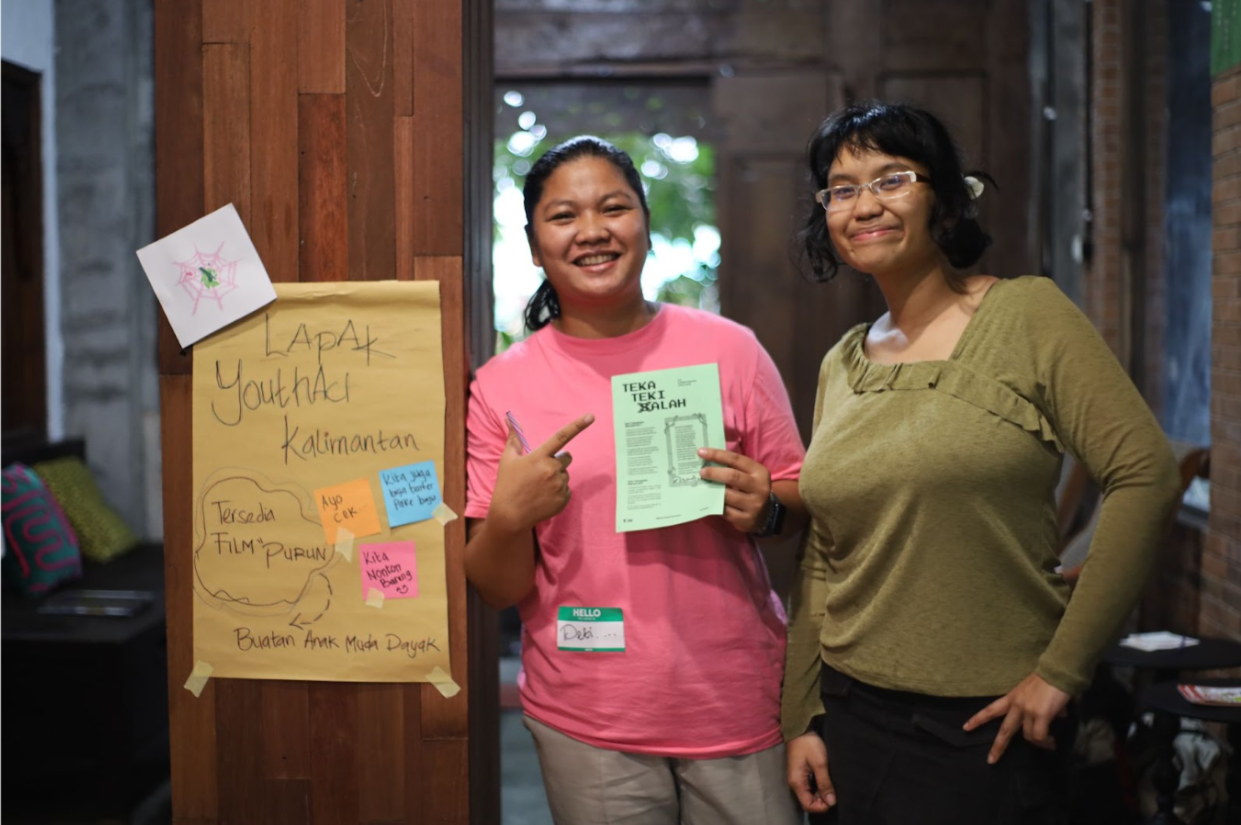
Roles constantly shifted. Those who shared became listeners; those who came as observers gradually joined the conversations. No position was fixed.
Weaving Networks, Not Heroic Projects
One key moment was the collective matchmaking session, intentionally designed in a light, almost playful way, like community “matchmaking.” Each collective was invited to be honest: what collaborations were possible, what was realistic, and what needed to be nurtured slowly.
From this process emerged various small-scale collaboration ideas: archiving Indigenous women’s knowledge, producing more accessible content, cross-issue knowledge exchanges, and upcycling as a storytelling medium.
For us, this matters. Community work does not always have to be grand or heroic. In fact, smaller initiatives often allow relationships to be cared for more honestly and sustainably.
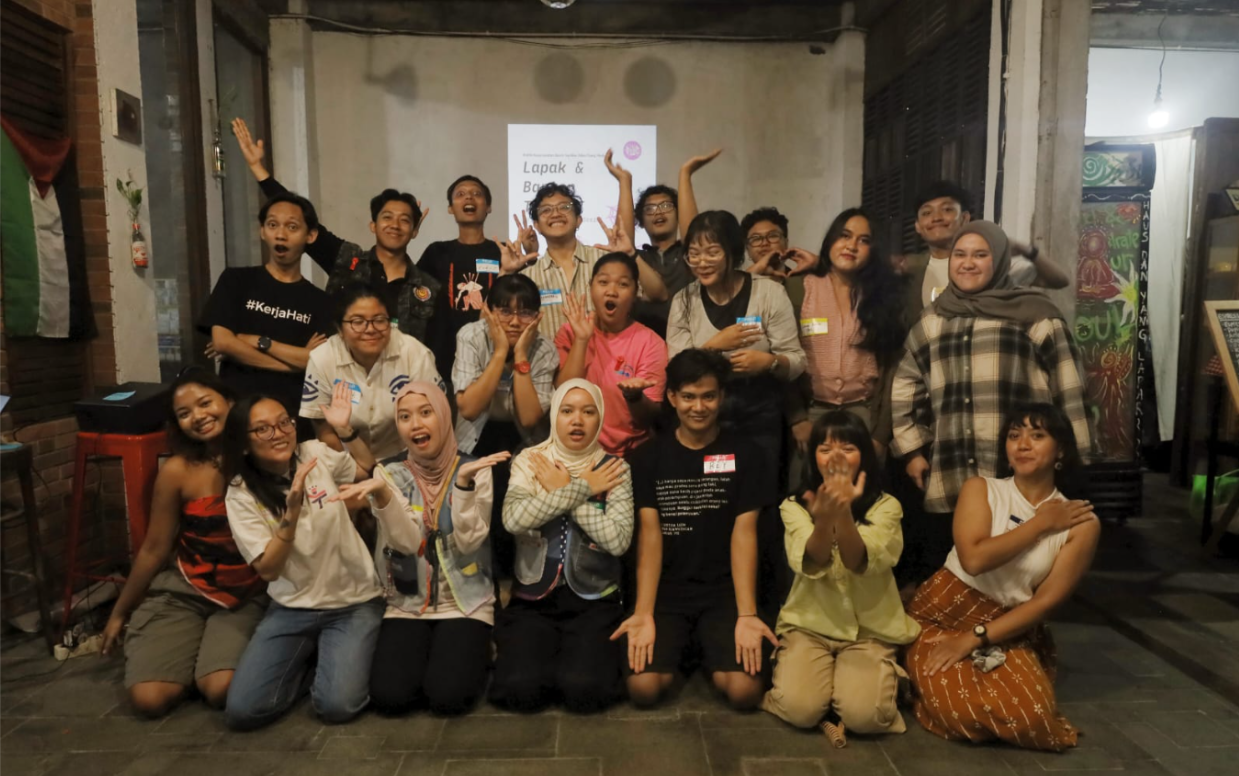
A Web That Continues to Be Woven
When the event ended, the process did not. What remained were residues: ongoing conversations, exchanged messages, tentative plans, and a sense of connection that is difficult to quantify.
Arisan Laba-Laba Social reminds us that networks are not always built through large, formal structures. They grow through trust, care, and a willingness to listen.
This gathering reaffirmed one thing:
local knowledge, care work, and community stories are not supplementary, they are central to imagining a more just future.
The social spider web woven that day may be fragile. Yet it is precisely in its fragility that it invites us to keep caring, reconnecting, and weaving it together.
Writer: Deti Apriani