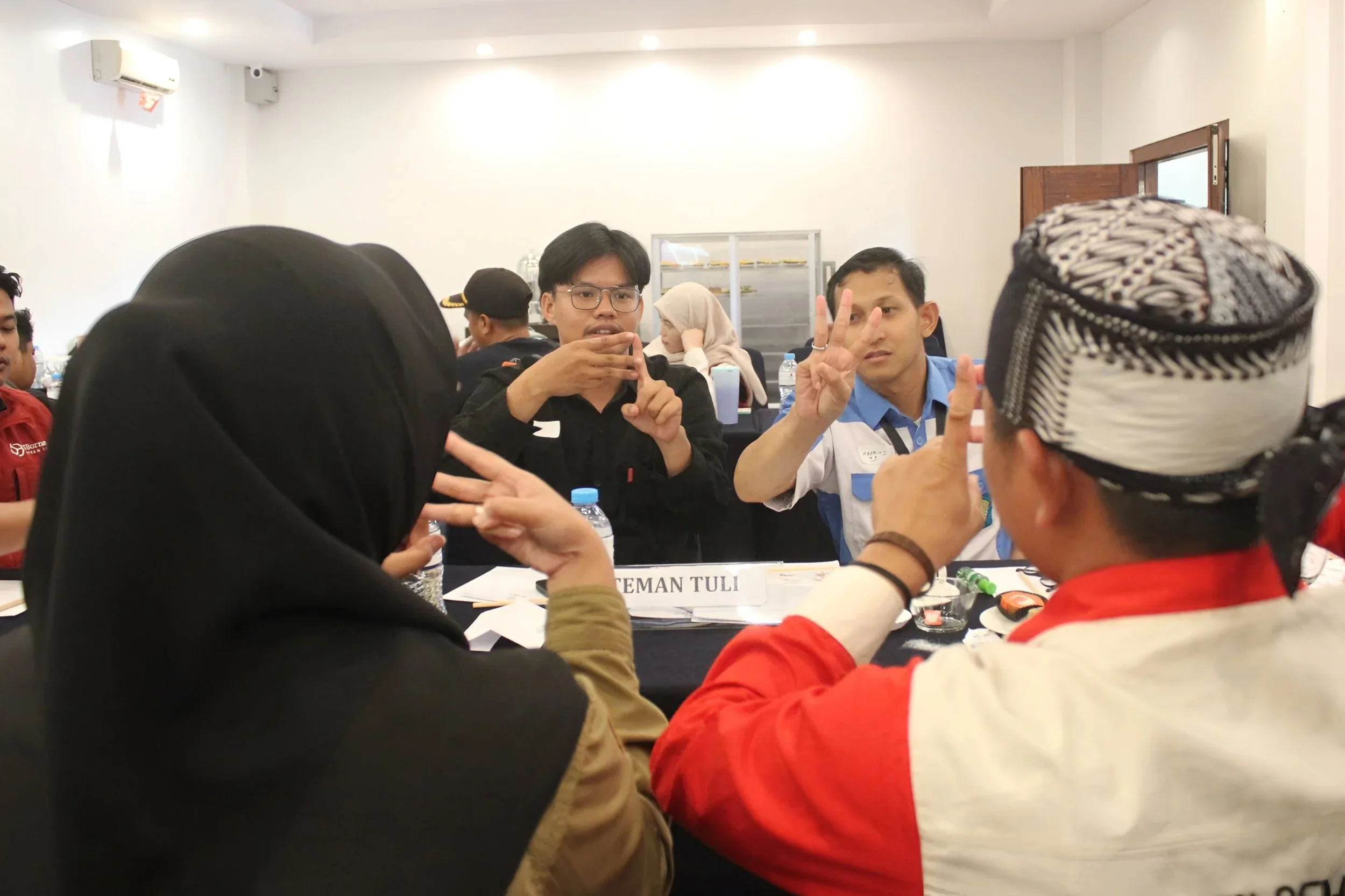
Everyone has the right to feel safe, heard, and included in solutions during times of crisis. Yet in reality, many people still face barriers to participating equally — from limited access to information and non-inclusive communication methods to systems that do not yet fully understand diverse needs.
Amid the recurring threats of floods and forest fires in South Kalimantan, the need to build more equitable spaces for collaboration has become increasingly urgent. Driven by this spirit, more than 30 participants from Indigenous communities, persons with disabilities, civil society organizations, and various stakeholders gathered in Banjarbaru.
The gathering took place through the Weaving Collaboration Program: Promoting Disability Inclusion in the Context of Indigenous Communities in Kalimantan, held on 20–21 April 2026 by Ranu Welum Foundation together with Borneo Urban Lab and the National Commission on Disabilities of Indonesia, with support from the Ministry of Home Affairs of the Republic of Indonesia and Ford Foundation.
This event created a meeting space for groups that rarely sit in the same conversation, yet share a common goal: building communities that are safe, equal, and caring for one another.
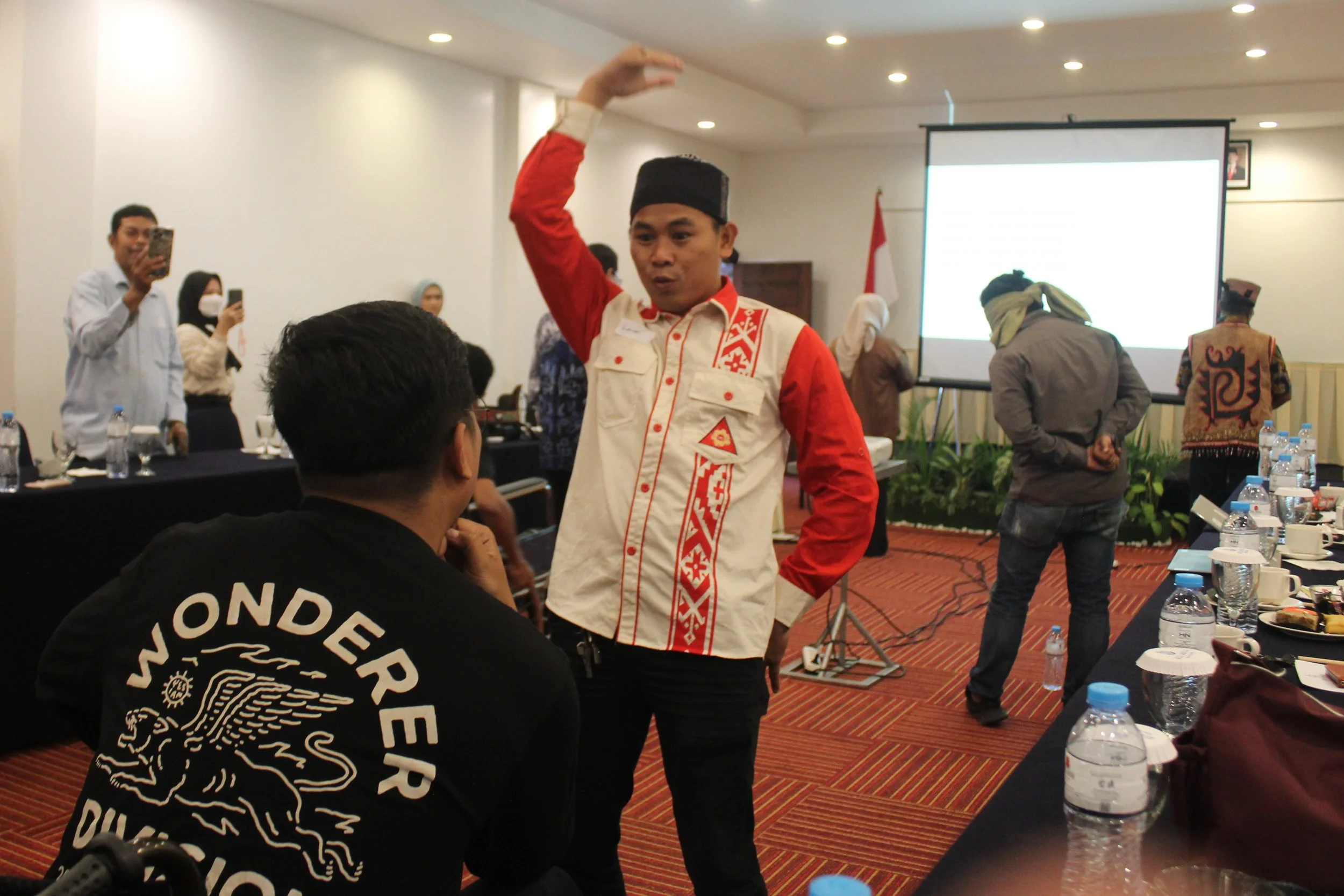
Accessibility Simulation: Learning from Experience to Recognize Barriers
Participants represented a wide range of disabilities, including people with visual, hearing, intellectual, and physical disabilities, as well as parents of children with disabilities. Their presence made the forum more than just a discussion, as lived experiences and real needs were shared directly by those most affected.
In the session Understanding Disability from an Indigenous Perspective, participants explored how the values of mutual cooperation, respect, and solidarity within Indigenous communities can become the foundation for building more inclusive environments.
Through the Accessibility Simulation and Inclusive Observation session, participants were invited to directly experience barriers often faced by persons with disabilities. Some participants walked blindfolded, while others attempted to communicate without speaking or navigated spaces using wheelchairs while encountering obstacles.
This simple yet powerful experience raised awareness that barriers often do not lie within individuals themselves, but within environments, information systems, and structures that are not yet accessible to everyone.
Aisyah Wardani, one of the facilitators, emphasized the importance of having the courage to interact equally.
“When communicating with persons with disabilities, there is nothing wrong and no need to hesitate. They socialize just like everyone else. However, there are things we should pay attention to, for example, when communicating with Deaf friends, it is better not to wear a mask.”
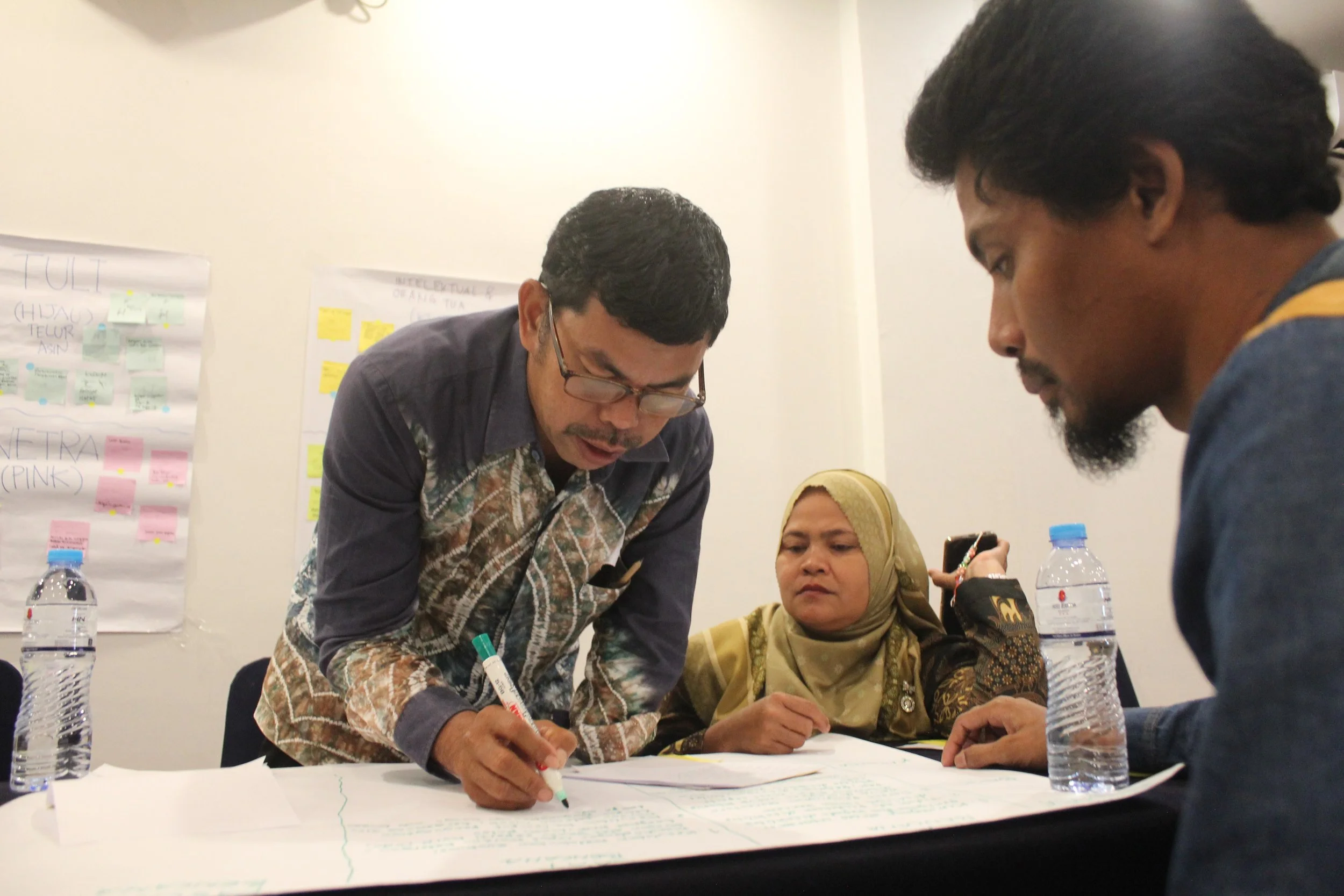
Building Shared Solutions for Equal Access
The program continued with an Inclusive Walking Tour, where participants walked together around the surrounding area while identifying physical barriers, information access challenges, and social obstacles still faced by persons with disabilities in everyday life.
The findings were later discussed in the Mapping Barriers and Inclusive Disaster Risk Reduction (DRR) Solutions forum. During this session, participants reflected on recurring floods and forest fires that affect the region almost every year, including how some persons with disabilities still struggle to access information, assistance, and proper services during emergencies.
Rianor, Chairperson of PERTUNI South Kalimantan, highlighted the importance of involving persons with disabilities from the very beginning of the planning process.
“When we are involved from the start, the solutions developed become more accurate and truly respond to realities in the field.”
Meanwhile, Sahrani, representing an Indigenous community, shared that the activity became a valuable new experience.
“Indigenous communities were able to discuss directly with persons with disabilities and learn a great deal about the barriers they face. This will become an important lesson when we return to our communities.”
As a concrete outcome, participants developed a mapping of the situations, potentials, and vulnerabilities of persons with disabilities in the context of floods and forest fires in South Kalimantan. They also drafted initial recommendations and an inclusive Disaster Risk Reduction (DRR) protocol covering mitigation, early warning systems, evacuation procedures, and post-disaster recovery.
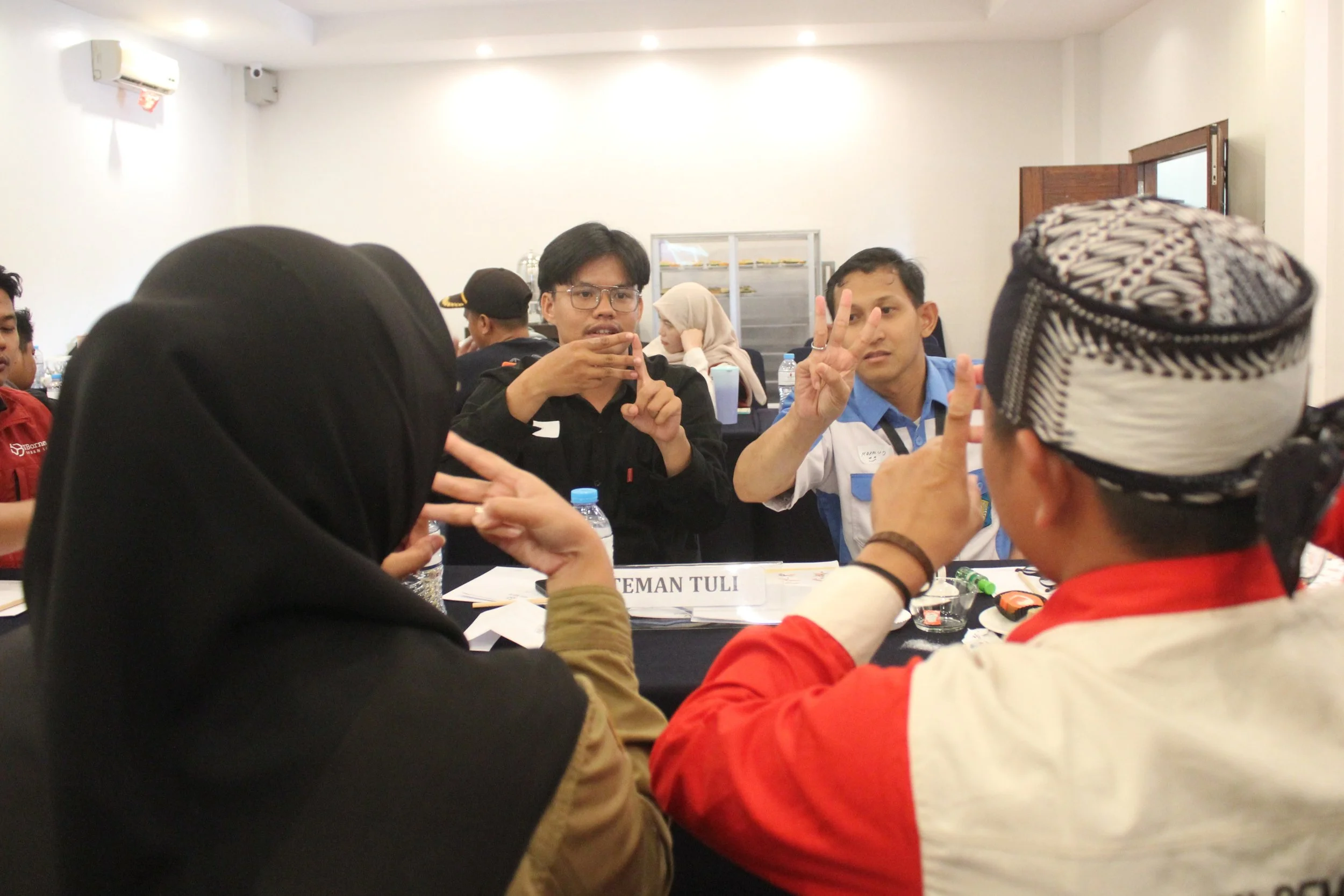
More than just a two-day event, the forum demonstrated that change begins with encounter and dialogue. When Indigenous communities, persons with disabilities, and various stakeholders are willing to sit together, listen to one another, and move in the same direction, a more inclusive South Kalimantan is no longer merely a hope, it is something being built together.