Persons with disabilities continue to face various barriers in daily life, ranging from access to information, public services, and participation spaces, to involvement in decision-making at the community level. In Indigenous community areas, these challenges are often compounded by limited services, a lack of inclusive approaches, and persistent social stigma.
On 15–16 April 2026 in Palangka Raya, the activity Sensitization of Indigenous Community Elders and Inclusive Disaster Risk Reduction in Central Kalimantan was organized by Ranu Welum Foundation in collaboration with the National Commission on Disability (KND), with support from the Ministry of Home Affairs of the Republic of Indonesia and Ford Foundation. More than 30 participants, consisting of Indigenous communities, persons with various disabilities, local communities, civil society organizations, government institutions, and stakeholders, gathered in Palangka Raya to strengthen shared understanding of disability rights and to build a more inclusive community-based approach.
This activity aimed to increase the awareness of Indigenous community leaders, civil society organizations, and stakeholders regarding the rights of persons with disabilities and the importance of inclusive approaches in social life as well as community governance. The forum became a shared space to identify the situations, challenges, and vulnerabilities faced by persons with disabilities in the context of ecological disasters, particularly forest fires and floods that frequently occur in Central Kalimantan.
Participants represented various types of disabilities, including physical, intellectual, deaf, blind, and psychosocial disabilities, as well as parents of children with disabilities. Their involvement ensured that the discussions were not merely about persons with disabilities, but truly involved their lived experiences, perspectives, and needs directly.
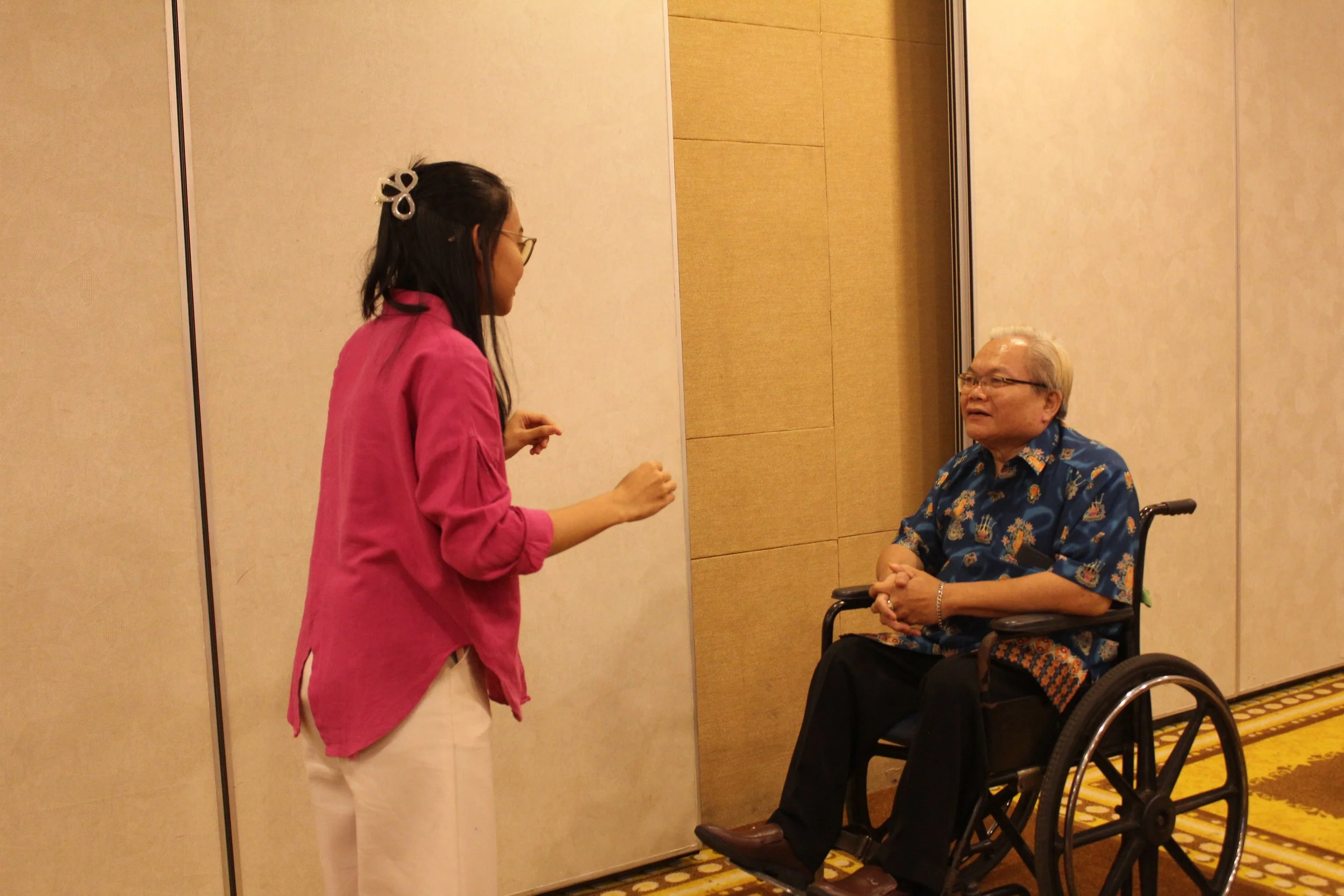
Devia (deaf) and Mr. Junaedy (a wheelchair user), from left to right, communicate using sign language. Mr. Junaedy tries to convey a message he received from a piece of paper to Devia through sign language. This activity was conducted to help participants understand the communication and information access challenges faced by persons with disabilities in their daily lives.
During the two-day activity, participants took part in various interactive and participatory sessions. The session Unpacking the Roots of Stigma and Discrimination became a shared reflection space on the social barriers still experienced by persons with disabilities at the community level. Participants also joined an Inclusive Walking Tour, a joint walking activity involving Indigenous communities, stakeholders, and participants with disabilities to map accessibility needs and build empathy for the daily experiences of vulnerable groups.
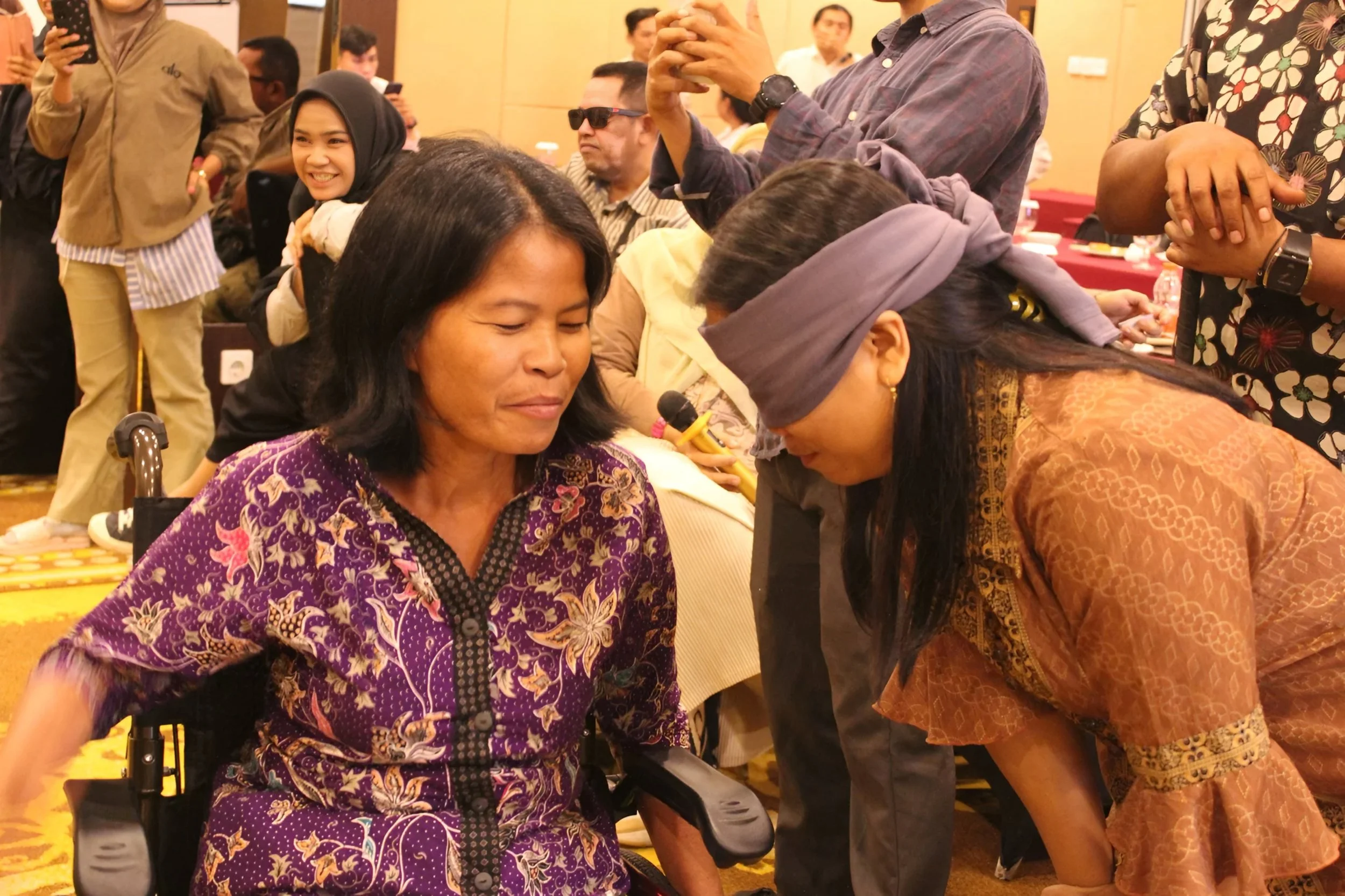
In addition, the Accessibility Simulation and Inclusive Observation activity was conducted through games involving participants with and without disabilities. In the simulation, non-disabled participants were blindfolded to experience the mobility challenges faced by persons with visual impairments, while others tried to communicate without sound to understand barriers to information access for the deaf community. This activity became a direct experience that strengthened awareness of the importance of accessible environments and equal communication.
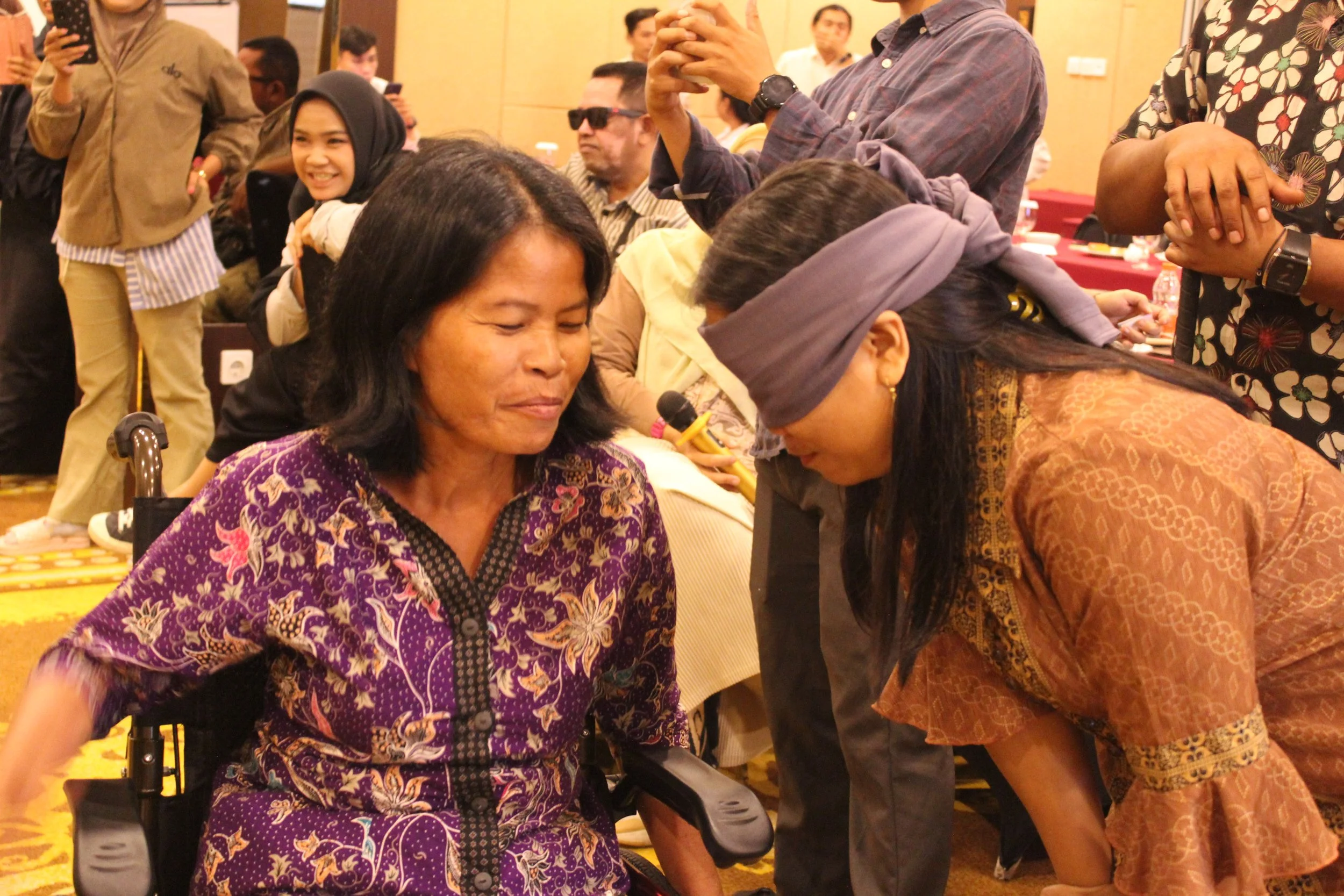
Selong (a wheelchair user) and Matrianih (blindfolded), from left to right. Selong received information through sign language and tried to convey it verbally to Matrianih.
A participant representative from the Indigenous community, Sukma, Damang of the Indigenous Community of Pilang Village, stated that the activity opened a new perspective on the lived experiences of persons with disabilities.
“When I joined the simulation with my eyes covered and relied only on verbal directions, I felt how difficult it is to access information without proper support. I admire friends with disabilities even more. This activity opened my mind that everyone has strengths, and we need more inclusive ways of communicating,” Sukma, Damang of the Indigenous Community of Pilang Village.
The discussion then continued through a Focus Group Discussion (FGD) to map problems, potentials, and good practices already carried out by Indigenous communities in protecting vulnerable groups. In this session, participants also discussed how to ensure the involvement of persons with disabilities in disaster risk reduction efforts from the planning stage through recovery.
Frans Jayanto, S.Hut., M.P., from the Central Kalimantan Provincial Disaster Management Agency (BPB-PK), stated that this activity is important to strengthen an inclusive perspective in disaster management.
“We realize that many groups are still left behind and not yet fully involved, especially friends with disabilities. This activity is an important space to meet directly, hear their experiences, and map needs before, during, and after disasters,” Frans Jayanto, D. Hut.,M.P.
The activity was also attended and officially opened by Dr. Dante Rigmalia, M.Pd., from the National Commission on Disability, who emphasized that the fulfillment of the rights of persons with disabilities must be integrated across all sectors, including preparedness, response, and disaster management efforts. In her presentation, Dr. Dante also highlighted the importance of understanding the 22 rights of persons with disabilities, 4 special rights for women with disabilities, and 7 special rights for children with disabilities.
As an initial outcome, the activity produced a mapping of the situation, potentials, and vulnerabilities of persons with disabilities in the context of forest fires and floods in Central Kalimantan. In addition, participants drafted initial recommendations or an inclusive Disaster Risk Reduction (DRR) protocol that considers mitigation aspects, early warning systems, evacuation, and post-disaster recovery.
The initial document is expected to become a shared foundation for local governments, Indigenous communities, organizations of persons with disabilities, and civil society institutions in building a disaster management system that is more just, responsive, and supportive of vulnerable groups.
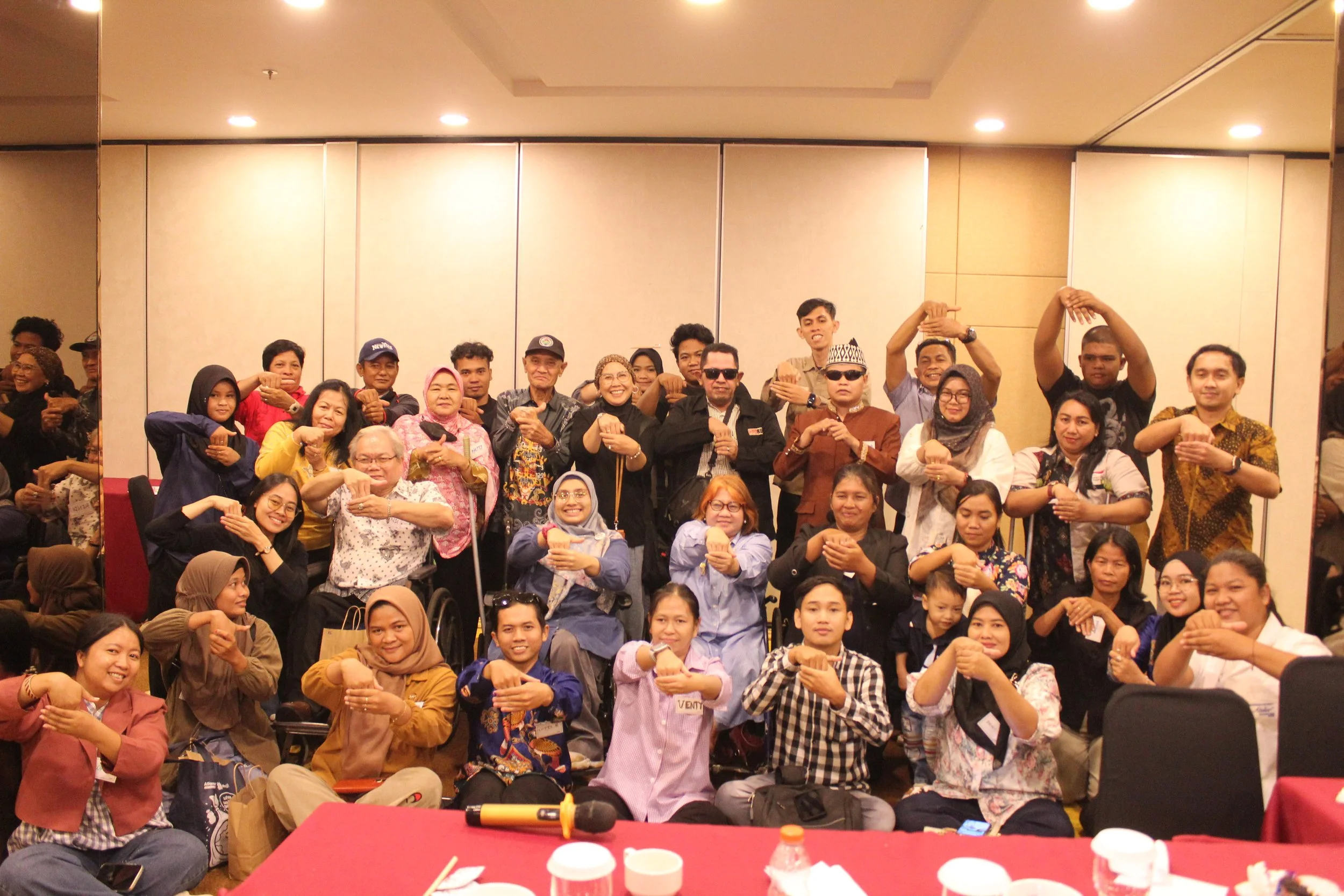
This activity reaffirmed that an inclusive society begins with recognizing that everyone has the right to participate, be heard, and have equal access. The local knowledge of Indigenous communities and the lived experiences of persons with disabilities are essential parts of building a fairer and more resilient future for Kalimantan.